Can You Split Your Car Payment Into Two? Here Is How It Works
Income arrives on a schedule. Bills don't. When your car payment due date and your paycheck date don't line up, splitting that payment into two smaller installments is a practical fix most borrowers don't know they have access to.
Most people can do this. The method depends on your lender, how to set it up, what to watch for, and whether it actually makes sense for your situation.
Can You Split Your Car Payment, and What Does It Mean?
Yes. You can divide your monthly car payment into two installments paid within the same billing cycle.
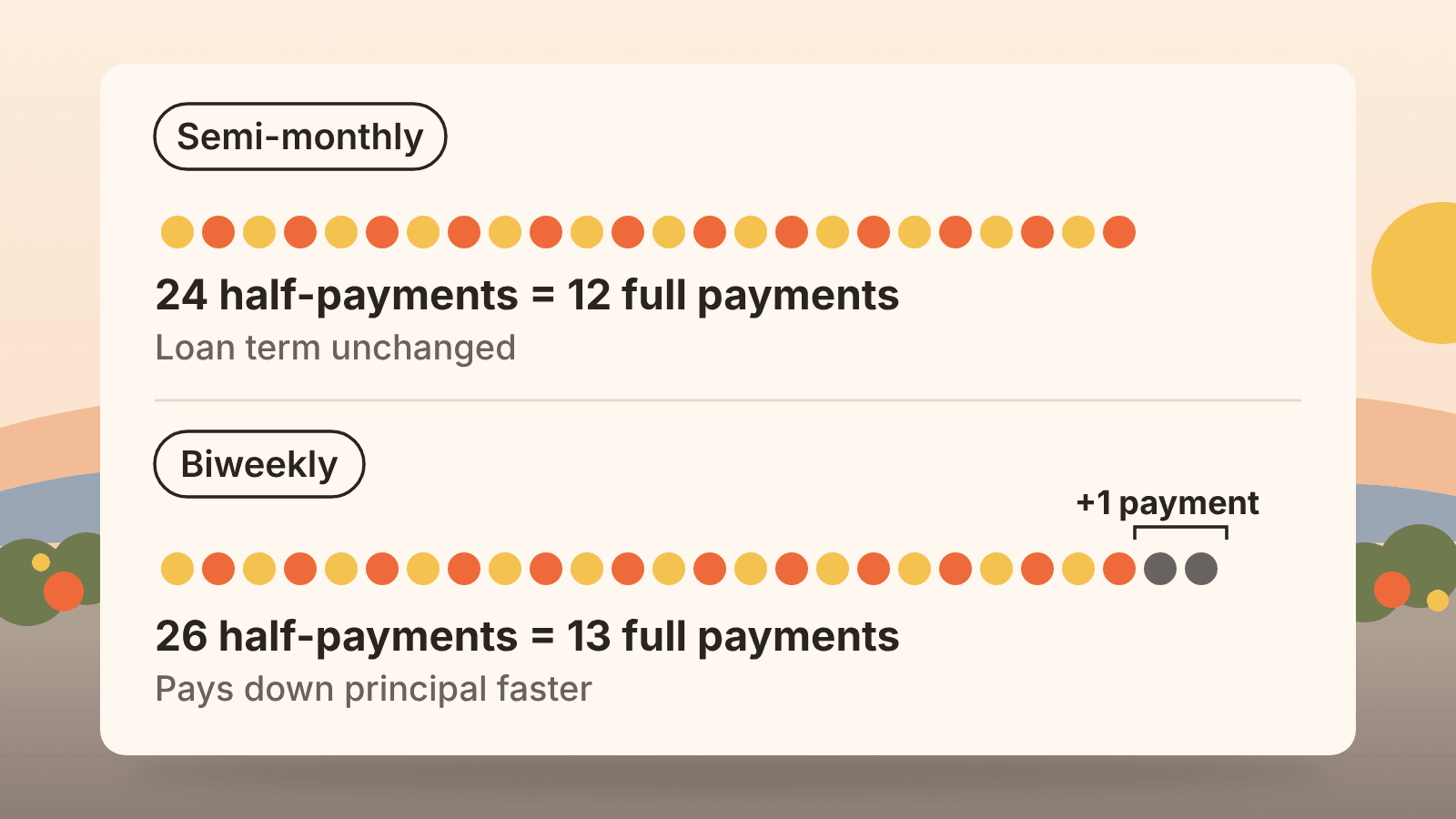
This arrangement is called semi-monthly payment: 24 payments per year, identical in total to a standard monthly plan. Your loan terms stay the same. Your payoff date doesn't move. It doesn't add a payment, speed up your payoff, or reduce total interest owed.
Biweekly payment is a separate strategy that gets confused with splitting regularly. Biweekly means making a half-payment every two weeks, producing 26 half-payments per year. That equals 13 full monthly payments instead of 12, and that extra payment reduces your principal faster and shortens the loan term. Semi-monthly splitting produces no such effect.
The purpose of splitting a monthly car payment is cash flow timing, not interest reduction. You're matching when money leaves your account to when income actually arrives. Nothing about the loan itself changes.
How to Split Your Car Payment: Two Methods
There are two ways to split your car payment. You can set it up directly with your lender, or use a third-party service that pays your lender in full and lets you pay it back in two parts. Which option works best for you depends on how your lender handles partial payments, so check that before you choose.
Ask Your Lender Directly
Lender policies on partial payments vary significantly, and there's no industry standard.
Some lenders accept two half-payments within a single billing cycle without issue. Others hold any partial payment in a suspense account until the full amount is received, meaning your first installment doesn't apply to your balance at all until the second one clears.
Before assuming any flexibility exists, call your lender and ask three specific questions: do you accept partial payments within a billing cycle, how exactly are they applied to my account, and are there any fees for non-standard payment arrangements?
Get the answers confirmed in writing, not just verbally over the phone. Processing timelines vary by lender, so confirm how long transfers take before scheduling anything close to your due date.
Use a Third-Party Payment Service
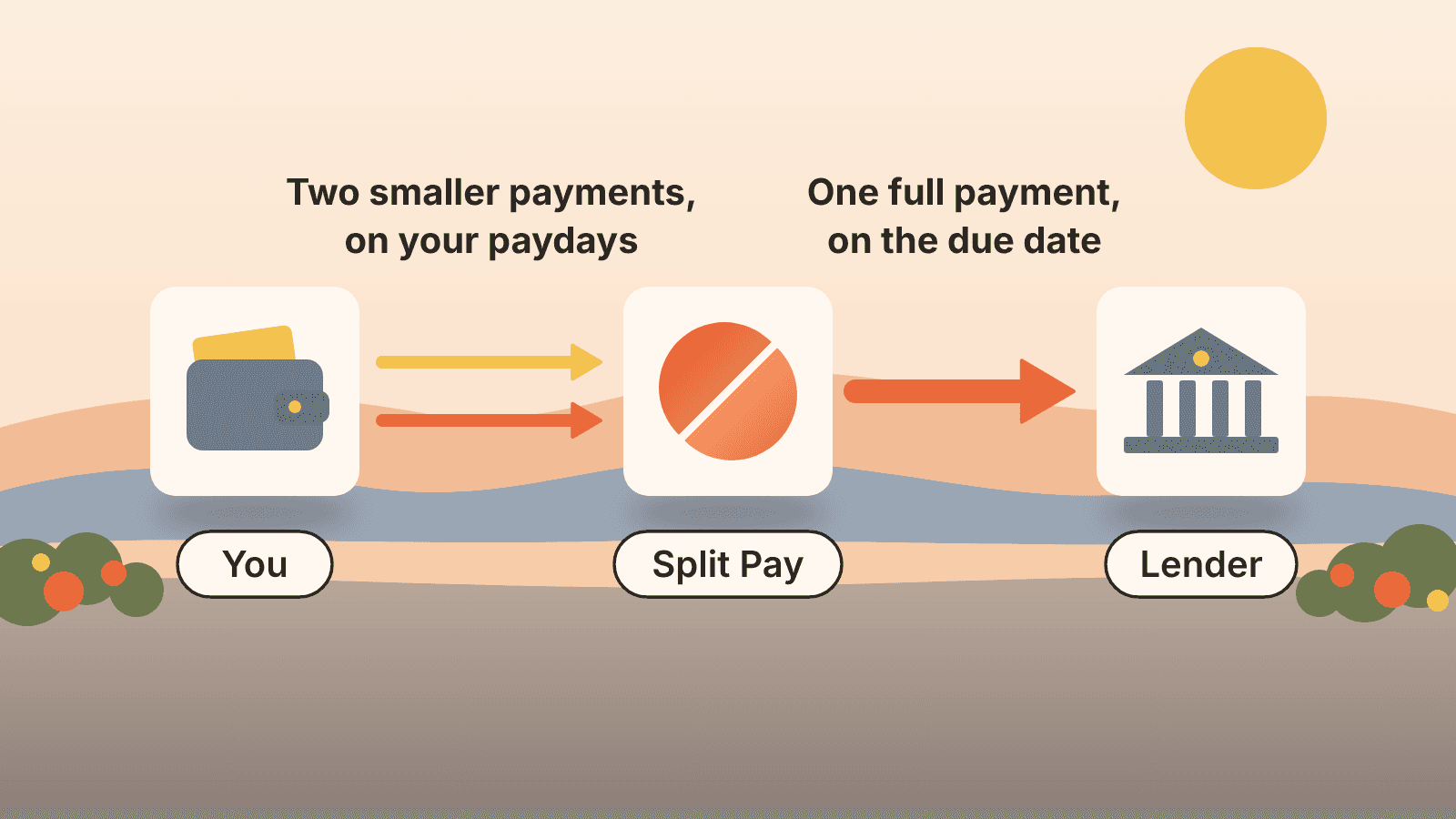
Split Pay advances your full payment to the lender on the due date, then collects from you in two smaller amounts timed to when money actually hits your account.
Your lender receives one complete, on-time payment and has no involvement in or awareness of the split arrangement. No lender approval is needed, and this works regardless of whether your lender accepts partial payments directly.
The lender sees a single complete payment, same as any other month. Split Pay functions purely as a cash flow and budgeting tool. It doesn't affect your loan balance, your interest rate, or your payoff timeline.
Reasons Why Borrowers Split a Car Payment
1. Payday and due date don't align. This is the most common reason. If your paycheck arrives on the 8th and your car payment is due on the 1st, you're consistently funding that payment from the prior cycle's money. Splitting into two installments timed to your actual pay dates eliminates that structural gap without requiring any changes to the loan.
2. Two smaller amounts are easier to absorb than one large one. A single car payment pulling $550 from your account in one transaction can create a tight week even when your overall monthly cash flow is fine.
Splitting that into two $275 pulls on different dates spreads the impact and keeps your day-to-day balance more stable. According to a 2023 Federal Reserve report, 37% of Americans would have difficulty covering an unexpected $400 expense.
For households managing multiple recurring bills, reducing the single-transaction size on any one of them has a measurable effect on daily cash availability.
3. Aligning outflow with income lowers missed payment risk. Most missed car payments aren't caused by a lack of funds over the course of a month. They happen because the full amount wasn't available on one specific date. Two smaller payments timed to land right after income arrives are far less likely to bounce or trigger an overdraft than one large payment pulling on the wrong day.
4. Two smaller, predictable payments are also easier to fit around other bills. When you know exactly what's leaving your account and when, every other spending decision that month gets simpler.
What to Watch Out For When Splitting Your Car Payment
If your lender holds partial payments until the full amount clears, the first installment offers no protection on its own. It isn't credited, it doesn't count as applied, and it won't prevent a late mark if the second payment doesn't arrive in time. Both installments need to post before your due date for the arrangement to work. This is the single most important thing to verify with your lender before setting anything up.
ACH transfers take one to three business days under normal conditions. Scheduling your second installment the day before your due date leaves no margin if anything delays the transfer. Build in a minimum of three to five business days before the due date for the second payment, and more if you're setting this up for the first time and haven't confirmed your lender's actual processing speed.
Some lenders charge for non-standard payment arrangements. Some third-party services charge a monthly or per-transaction fee for the splitting function. A fee may still be worth paying if the alternative is a $35 late fee or an overdraft charge, but know the full cost before committing.
Managing two transactions instead of one means two points where something can go unnoticed. A missed confirmation, a changed bank account, or a processing error on either installment can create problems. Set up account notifications for both payments and verify each one posts as expected.
Does Splitting Your Car Payment Affect Your Credit Score?
No, as long as the full payment reaches your lender on time. Credit bureaus report whether the total amount due was received by the due date. They don't track the number of transactions used to make that happen, and they don't report payment amounts at the transaction level.
If you use Split Pay, your lender records a single complete on-time payment. The credit outcome is identical to making a standard monthly payment yourself.
With a direct lender arrangement, the only credit risk is if a partial payment is delayed or misapplied and the full amount doesn't post by your due date. That generates a late mark regardless of when you submitted the first installment.
Does Splitting Your Car Payment Save You Interest?
No. Semi-monthly splitting keeps your annual payment total identical to a standard monthly schedule, so total interest paid over the life of the loan doesn't change.
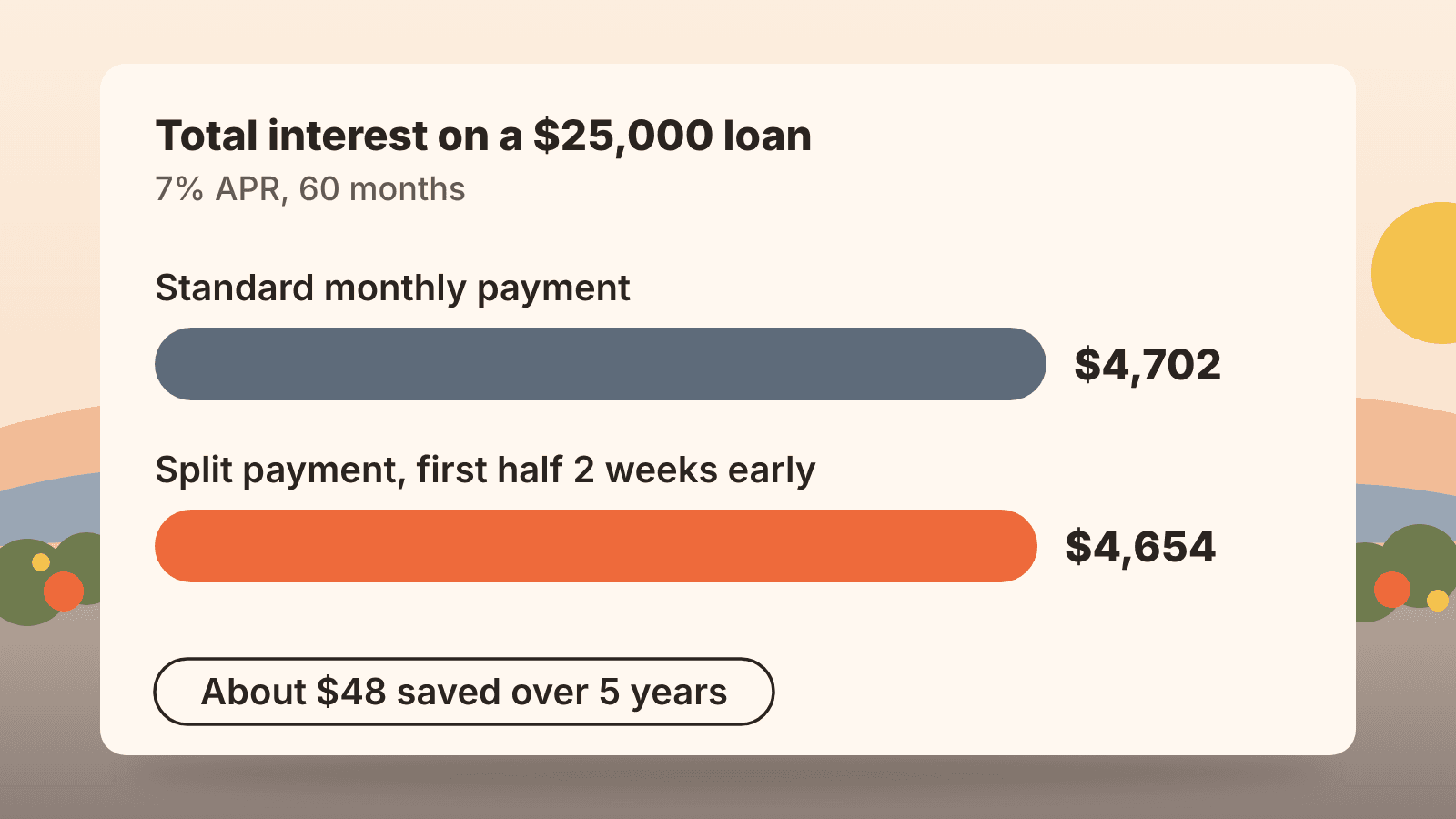
There is a narrow technical exception on simple-interest loans, where interest accrues daily on the outstanding principal balance.
Paying the first half of your monthly payment two weeks before the due date slightly reduces the balance during that window, cutting daily interest accrual by a small amount.
On a $25,000 loan at 7% APR over 60 months, this effect saves roughly $9 to $10 per year, or about $48 over the full loan term. Real, but not a reason to split your payment.
For borrowers whose actual goal is reducing total interest paid, the effective routes are making additional principal-only payments on top of your regular schedule, or refinancing to a lower rate. Splitting your monthly payment into two installments achieves neither.
Is Splitting Your Car Payment a Good Idea?
This depends entirely on what's creating friction with your current payment arrangement.
It may be a good fit if:
You're paid weekly or biweekly and a single lump-sum payment on one fixed date consistently creates a cash crunch, even when your overall monthly income covers the amount comfortably. The issue isn't what you owe. It's the gap between when the money is due and when it arrives.
You've missed or nearly missed payments because of timing, not because the funds weren't there over the course of the month. If the money existed but wasn't in the right place on the right day, splitting addresses that directly.
You want more predictability in your monthly cash flow without modifying your loan terms. Two payments timed to your pay cycle lets you smooth the impact across the month while leaving the loan itself completely unchanged.
It may not be necessary if:
Your current monthly payment clears without any timing pressure and your account balance is consistently comfortable on your due date. Adding a second transaction and a second monitoring point creates complexity with no upside if the existing arrangement works.
Your lender already offers a flexible payment schedule that fits your income cycle. Some lenders allow you to set a custom due date or switch to a different payment frequency directly. If that option solves the timing issue, it's simpler than a third-party arrangement.
Your goal is something other than fixing a timing problem. Splitting only addresses when payments leave your account, nothing else.
Can You Split Your Car Payment: FAQs
1. Can I pay half my car payment early and half later?
Yes, in most cases. Both installments need to post to your lender before the due date, and your lender's policy on partial payments determines how they're applied. Confirm that before setting anything up.
2. Do lenders accept partial car payments?
Some do, some don't. Always get the specific policy confirmed in writing before setting up any split arrangement directly with your lender.
3. Will splitting my car payment hurt my credit?
Not if the full payment reaches your lender on time. The only risk is a partial payment being delayed or misapplied, which can push the total post date past your due date.
4. Is splitting a car payment the same as biweekly payments?
No. Semi-monthly splitting produces 24 payments per year, the same total as a standard monthly plan. Biweekly produces 26, equal to 13 full payments annually. That extra payment reduces principal faster and can shorten the loan term.
5. What happens if I only pay part of my car payment?
It depends on your lender. Some credit the partial amount and wait for the balance. Others return it or hold it without applying it. If the full amount doesn't post by your due date, you risk a late fee and a negative credit report entry regardless of when the first installment was submitted.
6. Is splitting a car payment the same as refinancing?
No. Refinancing changes your loan terms, rate, or remaining length. Splitting leaves the loan entirely untouched. The only thing that changes is when within the month your money moves.